Introduction
As Friends, our belief that there is “that of God” in everyone grounds our practice of upholding the worth of each human being. Each person is guided by an Inward Teacher toward truth; each has the capacity to experience and be transformed by Spirit. The fullness of our lives – as individuals and as a community – unfolds as we live into these spiritual truths. Just as we value each person, these core beliefs lead us to value the diversity of culture, race, and ethnicity that enrich the human family. Richmond Friends Meeting commits to being a faith community of deep hospitality for and inclusion of all people.
We recognize that inequality and injustice based on race are deeply rooted in our society. Richmond Friends Meeting commits to challenging and repairing racism and racial bias in ourselves as individuals, within our Meeting, and in our Meeting’s relationships with the wider world.
In Twelfth Month 2022, Richmond Friends Meeting approved formation of the Ad Hoc Committee on Race and Racism. The committee was charged with discerning what our meeting was led to do around race and racism. The committee was then further charged with developing an action/implementation plan to guide the community into the future. The material on this page reflects the actions taken by the ad hoc committee and the ongoing results of that work.
History of RFM Concerning Race and Racism
What's Happening Now
Image Gallery
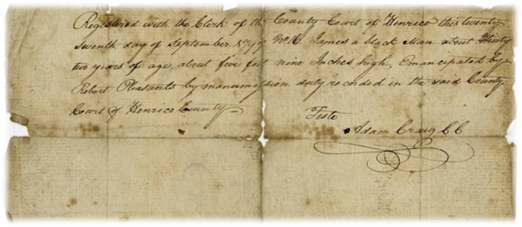
Henrico County Registration Paper, 1797
1797 Henrico County registration paper for a man named James, who had been manumitted by Robert Pleasants, a Quaker abolitionist.
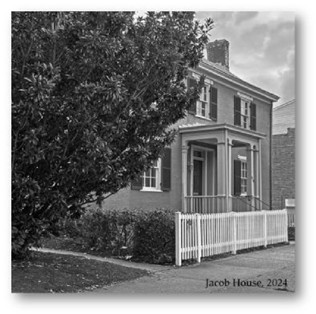
Jacob House
George Winston, a Quaker who freed his own slaves, trains and employs free Blacks in the brick making and construction of the Jacob House in 1817, originally 610 West Cary, now at Pine and Cary.
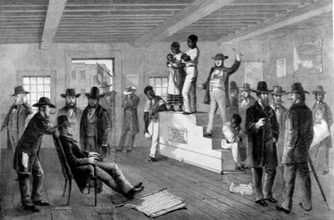
Richmond’s 19th Century Slave Market
Richmond’s 19th century slave market was the largest on the East Coast. Opposition to slavery and other factors caused a mass migration westward of many Virginia Quakers prior to the Civil War.
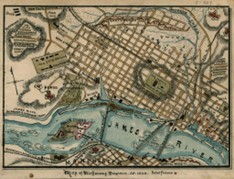
Map of Richmond, Virginia, 1863.
Map of Richmond, Virginia, 1863. The Confederate government took over the Meetinghouse at 19th and Cary for use as a soldiers’ hospital during the Civil War. Quakers met in private homes.
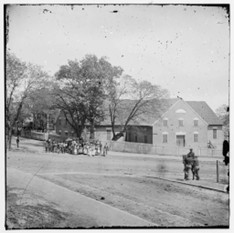
First African Baptist Church, 1865
First African Baptist Church, Richmond, 1865. Within a month of the war’s end, two Quaker sisters from Massachusetts—Lucy and Sarah Chase—opened a school in the Black church, eventually enrolling 1,000 children.
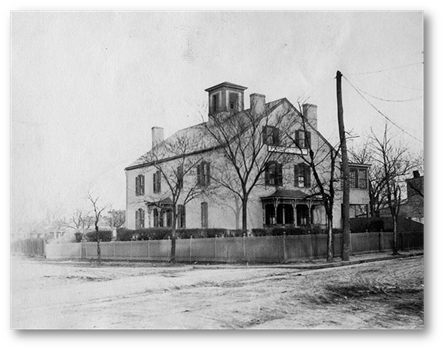
Friends Association for Children 1871
Friends Association for Children, 1871. First location of the Friends Asylum for Colored Orphans (now Friends Association for Children, located in present-day Gilpin Court). Richmond Friends were instrumental in helping establish this orphanage for children left homeless by the Civil War.